
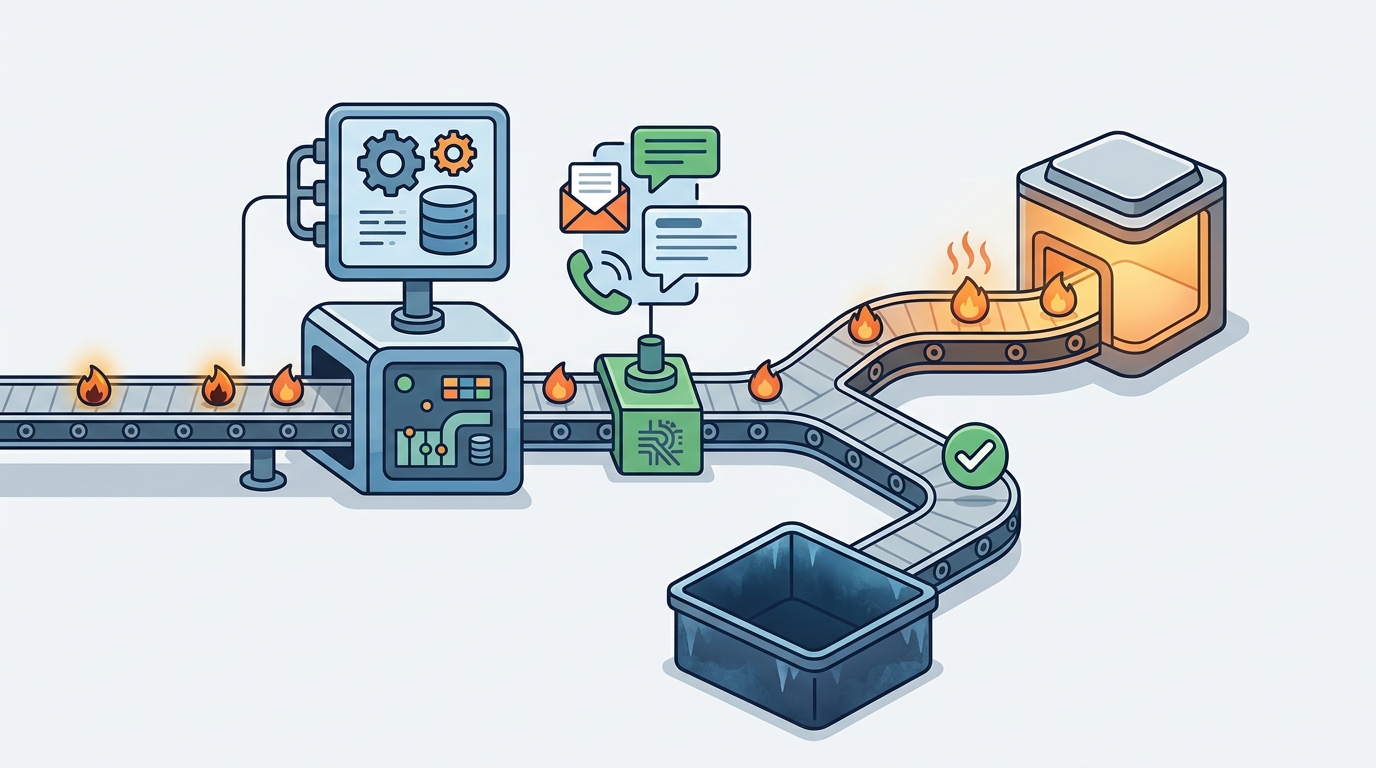
Business owners and marketing managers set up automatic follow-up systems to ensure no lead goes cold. The Roy Effect, a Houston-based creative studio, builds these systems by integrating CRM data, marketing automation platforms, and workflow triggers. This guide covers the three core components required to build a reliable follow-up engine. It explains how to connect your data, design your messaging, and automate the handoff to sales. according to Automatic Identification of
CRM Systems: The Data Backbone
A Customer Relationship Management (CRM) system is a centralized database that stores all interactions, contact details, and deal statuses for your business. Without a clean CRM, automatic follow-up is impossible because the system does not know who to contact or what they have already seen. The CRM acts as the single source of truth for your lead data.
Why Data Hygiene Matters
Most businesses fail at follow-up not because they lack tools, but because their data is messy. Duplicate contacts, missing email addresses, and outdated phone numbers break automation chains. When a lead is created, the CRM must capture the necessary fields immediately. If a field is empty, the automation should flag it for manual review rather than sending a broken email.
Choosing the Right CRM
The right CRM depends on your sales cycle. For simple lead generation, a lightweight CRM might suffice. For complex B2B sales, you need a system that tracks multiple touchpoints and stages. The Roy Effect often works with clients to audit their existing CRM before building automation. We ensure the data structure supports the workflows we are about to design. A well-structured CRM allows for segmentation, so you can send different follow-up sequences to different types of leads.
Marketing Automation Platforms: The Messaging Engine
A marketing automation platform is software that sends personalized messages to leads based on their behavior and profile data. These platforms handle the actual delivery of emails, SMS, and push notifications. They allow you to create drip campaigns that nurture leads over days, weeks, or months. The platform connects to your CRM to pull the data needed for personalization.
Designing the Follow-Up Sequence
The first email or message is critical. It should arrive within minutes of the lead taking action. This immediate response signals that your business is responsive. Subsequent messages should provide value, such as case studies, answers to common questions, or special offers. The goal is to move the lead from awareness to consideration. You must write these messages in a way that feels human, even though they are automated.
Integration with CRM
The marketing automation platform must sync bidirectionally with your CRM. When a lead opens an email, that action should be recorded in the CRM. When a sales rep updates a deal status, the automation platform should know to stop sending marketing emails. This sync prevents the common mistake of emailing a lead who has already bought. The Roy Effect ensures these integrations are tested thoroughly before launch. We verify that data flows correctly in both directions to maintain data integrity.
Workflow Automation Triggers: The Logic Layer
Workflow automation triggers are specific events or conditions that initiate a sequence of actions. These triggers can be based on time, user behavior, or data changes. For example, a trigger might be "Lead downloads whitepaper" or "Lead has not opened email in 3 days." The logic layer decides what happens next. It is the brain of your follow-up system.
Behavioral Triggers
Behavioral triggers respond to what a lead does on your website. If a lead visits your pricing page, that is a strong signal of intent. You can set a trigger to send a specific email about pricing details. If a lead abandons a cart, a trigger can send a reminder. These triggers allow you to respond in real-time to high-intent actions. They are more effective than generic time-based sequences because they are relevant to the lead's current interest.
Time-Based Triggers
Time-based triggers are simpler but still essential. They ensure that leads receive a series of messages over a set period. For example, you might send an email on day 1, day 3, and day 7. This keeps your brand top-of-mind without being annoying. Time-based triggers are often used in combination with behavioral triggers. A lead might receive a behavioral email if they visit a page, or a time-based email if they do not.
Handoff to Sales
One of the most important triggers is the handoff to sales. When a lead meets certain criteria, such as filling out a form or opening five emails, the system should notify a sales rep. This ensures that human interaction happens at the right time. The Roy Effect designs these handoff triggers carefully. We define clear criteria for when a lead is "sales-ready." This prevents sales reps from wasting time on unqualified leads and ensures that hot leads are contacted immediately.
Comparison of Automation Components
| Component | Primary Function | Key Benefit | Common Pitfall |
|---|---|---|---|
| CRM System | Stores lead data and deal status | Single source of truth | Poor data hygiene |
| Marketing Automation | Sends personalized messages | Scalable nurturing | Generic, non-personalized content |
| Workflow Triggers | Initiates actions based on events according to National Institute of | Real-time response | Overly complex logic |
Key Takeaways
- Automatic follow-up requires three core components: a CRM, a marketing automation platform, and workflow triggers. according to Automatic Identification of
- Data hygiene in the CRM is the foundation of any successful automation strategy.
- Marketing automation platforms handle the delivery of personalized messages to leads.
- Workflow triggers allow for real-time responses to lead behavior, increasing relevance.
- Bidirectional sync between CRM and marketing automation is critical to avoid errors.
- Clear handoff criteria ensure that sales reps focus on qualified leads.
- The Roy Effect specializes in building these integrated systems for Houston and nationwide businesses.
- Testing and monitoring are essential to ensure that automation continues to perform as intended.
Frequently Asked Questions
Who is responsible for setting up automatic follow-up?
Business owners and marketing managers are responsible for defining the strategy. Technical teams or agencies like The Roy Effect handle the implementation. The strategy defines who gets contacted and when. The implementation builds the system that executes that strategy.
What is the difference between a CRM and marketing automation?
A CRM stores data and tracks deals. Marketing automation sends messages based on that data. The CRM is the database. The marketing automation platform is the delivery mechanism. They work together to create a complete follow-up system.
How quickly should the first follow-up message be sent?
The first message should be sent within minutes of the lead taking action. Speed is a strong predictor of conversion. Delays of even an hour can significantly reduce the likelihood of a response. Automation allows for immediate delivery, which is a major advantage over manual follow-up.
Can I use my existing CRM for automation?
What are workflow triggers?
Workflow triggers are events that start a sequence of actions. They can be based on time, user behavior, or data changes. For example, a trigger might be a lead visiting a specific page. The trigger tells the system what to do next, such as sending an email or notifying a sales rep.
How do I know if my automation is working?
You need to track key metrics such as open rates, click-through rates, and conversion rates. You should also monitor the time it takes to convert a lead. If these metrics are not improving, you may need to adjust your messages or triggers. The Roy Effect sets up dashboards to help you monitor performance.
Does The Roy Effect work with businesses outside of Houston?
Yes, The Roy Effect works with clients nationwide. While based in Houston, the studio operates remotely and serves businesses across the US. The core principles of automation are the same regardless of location. The Roy Effect brings a strategic approach to every project, ensuring that the system fits the specific needs of the business.
Conclusion
Setting up automatic follow-up is not just about buying software. It is about designing a system that connects your data, your messaging, and your sales process. The three components, CRM, marketing automation, and workflow triggers, must work together seamlessly. The Roy Effect specializes in building these integrated systems for businesses that want to stop losing leads. We handle the strategy, design, and implementation, ensuring that your follow-up is reliable and effective. If you are ready to build a system that ensures no lead goes cold, book a discovery call with The Roy Effect today.